How the Dubai Metro Red Line Simplifies Daily Life: Landing in Dubai feels exciting, but sometimes it can also feel like you are lost. A new city, new routes, new rules, a city that moves fast and expects you to move with its speed. And that’s why one of the first questions most new residents ask is, ‘How do I get around without getting lost or stressed?’

This is where the Dubai Metro Red Line quietly becomes your anchor. It does more than move you from one station to another. It helps you understand how Dubai is laid out, how people commute, and how daily life flows across the city.
You soon discover that transportation is only one aspect of the situation when you become used to it. Healthcare access, driving norms, and basic protections also shape how smoothly you adjust.
Much like choosing the right route, finding a reliable Dubai insurance company (because insurance, like health and car, is compulsory here) later becomes part of living smart in the UAE. This guide breaks the Red Line down clearly, so you can move with confidence, plan better, and feel at home faster.
What Is the Dubai Metro Red Line?
If you are new to the UAE, understanding the Dubai Metro Red Line route makes everyday life easier from day one. This single line explains how the city moves, works, and connects.
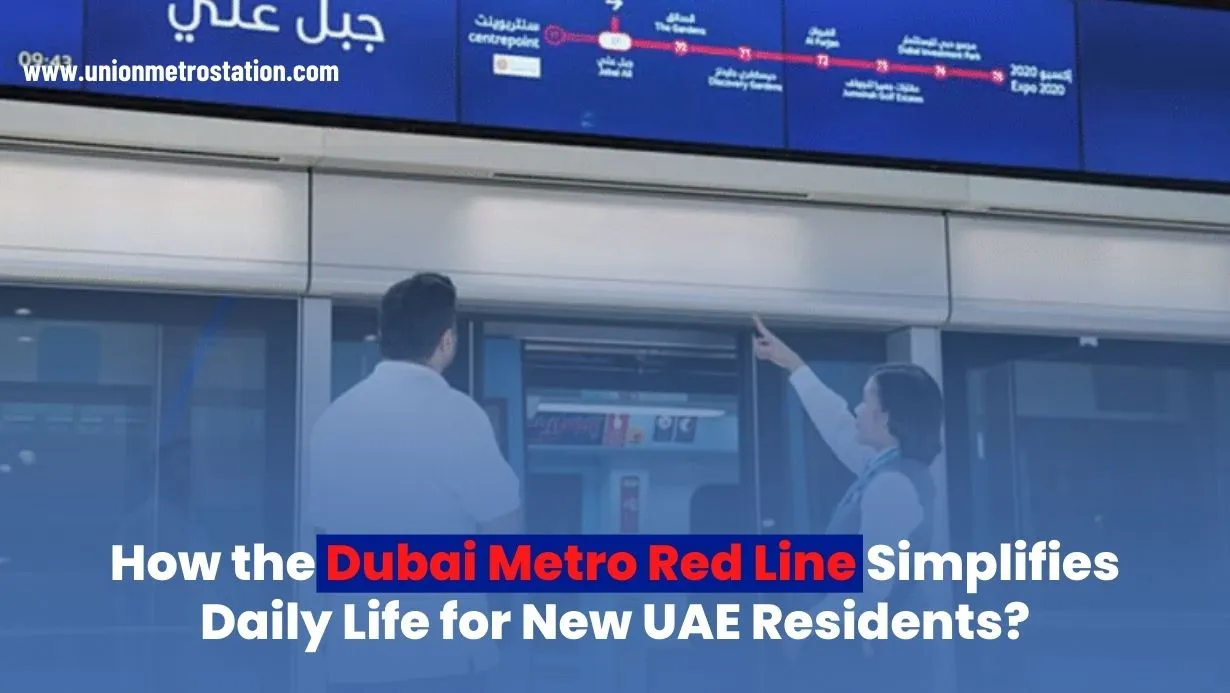
- The Dubai Metro Red Line is a 52.1 km fully automated rapid transit line designed for daily commuting. The main line runs from Centrepoint (R11), formerly Rashidiya, to Expo 2020 (R76).
- At Jabal Ali, a branch line breaks off and connects to the UAE Exchange (R75).
- It runs mainly along the Sheikh Zayed Road metro, Dubai’s main spine, where most offices, malls, and residential towers sit.
- Trains operate seven days a week, making them reliable for workdays, weekends, and travel days alike.
Explore the Red Line metro stations of the Dubai Metro.
Why Most Residents Choose to Live Along the Red Line
It links residential areas, business districts, and tourist hubs on one continuous route.
- You can reach offices, shopping centres, hospitals, and the airport without switching multiple transport modes.
- Rent near Red Line stations often costs more, simply because it saves time, fuel, and daily effort.
Practical Tip
- When house-hunting, check the walking distance to a Red Line station first.
- A shorter walk often matters more than a slightly larger apartment further away.
Once you understand how the Red Line shapes daily movement, it becomes easier to explore its stations, timings, and connections, which we will break down next.
Dubai Metro Red Line Route, Stations, Timings, and What to Expect
To understand Dubai quickly, you need to understand how the Dubai Metro Red Line stations are placed across the city. This single route explains where life happens and how people move between it.
How the Red Line runs across Dubai
It moves through Airport Terminals 1 and 3, giving direct access for frequent flyers and visitors. As the train continues, it passes through Deira and Old Dubai, areas known for traditional markets, offices, and older residential communities.
Further along, the route reaches Downtown Dubai and Business Bay, where most corporate offices and landmarks sit. It then connects Mall of the Emirates and Dubai Marina, popular for shopping, work, and modern living.
The main line ends at Expo 2020, with a branch from Jabal Ali leading to UAE Exchange. This Centrepoint to Expo 2020 stretch helps newcomers see Dubai from north to south in one ride.
Key Stations, New Residents Should Remember
When you are settling in, some stations are more important than others:
- Airport terminal stations for arrivals and departures.
- Union and BurJuman for switching between the Red and Green Lines.
- Burj Khalifa Dubai Mall, for visitors and city landmarks.
- Mall of the Emirates for shopping and daily needs.
- DMCC and Dubai Marina for work locations and residential towers.
Knowing these names early reduces confusion when reading metro maps or planning routes.
Operating Hours, Frequency, and Travel Time
The Red Line runs throughout the week with fixed timings. Trains operate from early morning to midnight on most days, with extended hours on Fridays. During peak hours, trains arrive every 5 to 8 minutes.
A full journey along the line usually takes between 70 and 90 minutes, which helps you plan work and daily travel with confidence.
- 5:00 AM to 12:00 AM (midnight) Monday through Thursday
- Friday: 5:00 AM to 1:00 AM (the following day)
- 5:00 AM to 12:00 AM (midnight) on Saturday
- 8:00 AM to 12:00 AM (midnight) on Sunday
Ticketing and Comfort on the Red Line
Travel uses the Nol card system, with fares based on zones crossed. At stations, vending machines, or licensed businesses, cards can be purchased and recharged. Stations and cabins stay air-conditioned and offer free Wi-Fi, mobile coverage, lifts, and clear signage. Some stations run underground, while most remain elevated, giving a clear view of the city.
Once you understand the route, stations, timings, and facilities, the next step is learning how the Red Line connects with other transport options and fits into daily life in Dubai.
Park and Ride Options for Drivers on the Red Line
Many residents do not rely only on the metro. They drive part of the way, park safely, and then continue by train. This is where Park and Ride Dubai Metro facilities make daily travel easier.
Where Park and Ride Works Best
The Red Line offers large, well-managed parking areas at key entry points:
- Centrepoint Station provides around 2,700 parking spaces, making it ideal for residents coming from outer neighbourhoods.
- Jabal Ali station offers close to 3,000 parking spaces, commonly used by people travelling from industrial and residential zones.
These locations allow you to avoid traffic-heavy sections of Sheikh Zayed Road while keeping your commute predictable.
Why This Setup Suits New Residents
If you live far from a station, driving to a Park and Ride location often saves time and fuel. Many families use this option on weekends, school days, or when travelling together. This mix of driving and metro use also means maintaining a valid car insurance policy remains essential, even if you rely on the train for most weekday travel.
Practical tips to use Park and Ride well
- Arrive early during workdays to secure parking easily.
- Keep your Nol card ready to avoid delays during peak hours.
- Use Park and Ride when heading to busy areas like Downtown or the Marina.
Once you know how to combine driving with the metro, the next step is understanding how the Red Line connects with other transport systems across Dubai.
Connectivity with Other Transport Systems
One reason the Red Line works so well is how smoothly it connects with the rest of Dubai’s transport network. These links help you plan door-to-door travel without guesswork.
- Interchange with the Green Line: You can switch between lines at Union and BurJuman stations. This connection helps you reach areas like Deira, Karama, and healthcare zones without exiting the metro system.
- Dubai Tram connections: At DMCC and Dubai Marina, the Red Line links directly with the Dubai Tram. This makes short trips within Marina, JBR, and nearby residential areas easier, especially during peak hours.
- Taxis and buses at stations: Most Red Line stations offer taxis and RTA bus stops right outside. You can cover the last stretch to home or office without long walks or extra planning.
Practical tip:
Use the same Nol card for metro, tram, and buses to keep travel simple.
With connectivity sorted, the next step is understanding how the Red Line fits into daily routines for work, errands, and city life.
Dubai Metro Red Line and Daily Life in the UAE
The Red Line is not just a transport route. It quietly shapes how people work, shop, travel, and manage everyday responsibilities across Dubai.
Commuting to Work
Many offices sit along Sheikh Zayed Road, which makes the Red Line a practical choice for daily commuting. It helps residents avoid peak traffic while keeping arrival times steady, especially during busy weekday mornings.
Visiting Malls
The Red Line stops directly at major destinations like the Dubai Mall and Mall of the Emirates. This allows residents and visitors to plan outings without worrying about parking, tolls, or busy roads.
Reaching Hospitals
Several healthcare facilities are located close to Red Line stations, making access simpler during appointments or emergencies. This daily convenience and high medical costs often highlight the importance of having suitable health insurance while living in the UAE.
Airport Access for Frequent Travel
With direct access to Airport Terminals 1 and 3, the Red Line suits frequent flyers and short trips. For residents who travel often, this easy connection naturally brings attention to planning essentials like travel insurance and UAE requirements.
For Businesses and Working Professionals
Service providers, technicians, and delivery teams often work in areas connected by the metro. While staff travel by train, vehicles support operations on the ground, which makes commercial vehicle insurance a practical consideration for daily business movement.
Companies operating across metro-connected districts often manage more than one vehicle. In such cases, fleet insurance in the UAE helps businesses handle coverage for cars, vans, or service vehicles used across different locations.
As daily routines become familiar, understanding how the Red Line supports work, health, and travel helps you plan the next step.
Final Thoughts
By now, it is clear why the Dubai Metro Red Line plays such an important role in daily life across the city. We have looked at how its route shapes where people live, how it connects workplaces, malls, hospitals, and airports, and why it helps new residents settle in with less confusion.
More importantly, it shows how smart planning around transport often leads to better decisions in work routines, travel habits, and everyday movement.
As you grow familiar with Dubai, the Red Line becomes more than a map line. It becomes a reference point for planning your days with confidence and clarity. Whether you are commuting, exploring, or managing a busy schedule, understanding the Dubai Metro Red Line helps you move through the city with ease.
Keep this guide in mind as you plan your routes, choose locations, and build a smoother, more organised life in Dubai.